 Ko VaaDKo VaaD
If every child converses differently...,
Yes every child's communication is important
Then why isn’t every conversation effective ?
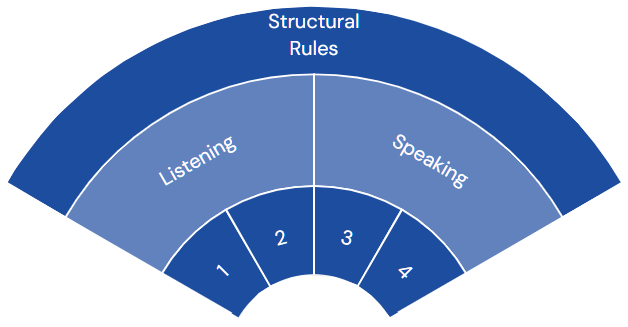
Structural rules in communication are the guidelines that determine the organization and flow of conversations. They provide a framework for skills such as how much to speak, when to speak, how to listen and the sequence of information, ensuring conversations are enjoyable and not one-sided. These structural skills are needed both via non verbal communication (body language and gestures) as well as verbal and are further needed to both receive as well as impart information. Listening and speaking need to flow into each other and form a pattern of their own. To support your child in building this rhythm, we focus on four foundational skills: 1. How to join a conversation 2. Orienting to the Speaker 3. Turn taking to the Speaker 4. Quantity of Speaking
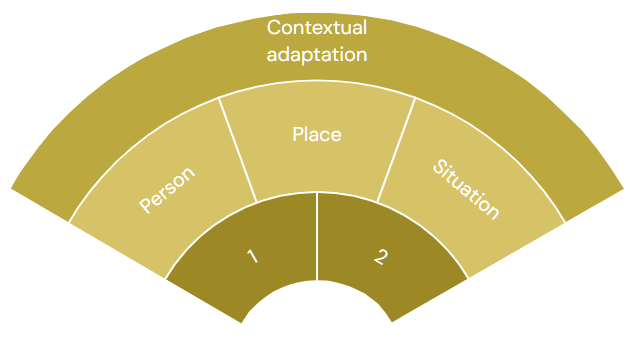
What and how we talk greatly depends on ‘Who’ or the person we are talking to and ‘Where” or the place we are at during the conversation. These two parameters together guide the topic or what we talk about along with the details we share during the conversation. When we are speaking to someone very close like a parent in the privacy of our house, we may talk about personal topics such as opinions about another family member, unfavourable experiences etc. in doing so , we would recount details in great length. In contrast while speaking to a neighbour outside the house, we may talk about a ‘general’ day at school / work in fewer details. Further, these two parameters also dictate the tone of voice and volume we converse in in adjunct to the choice of words (formal /informal), language and sentence structure. We focus on two important aspects of this skill: 1. Language (what is okay to share and when), and 2. Tone (how we express it depending on the situation).
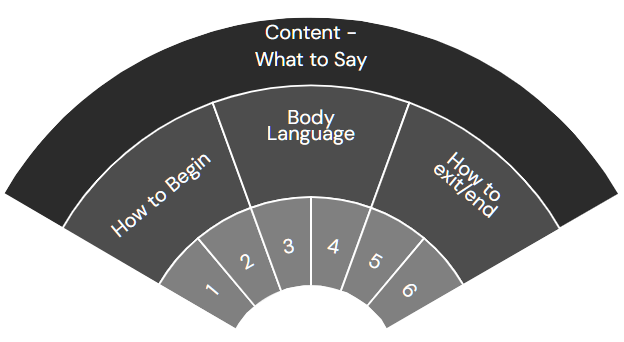
All engaging, enjoyable conversations need effective way to initiate a new conversation or join in an existing one as well as an understanding of when and how to end the conversation. And every start and end needs an equally effective middle !! Yes, its an art! The heart of the conversation is the topic, but more importantly is also, reciprocal in nature. This means it not only involves sharing own details but also showing curiosity about the conversation and the partner. It involves listening with understanding and feeling the emotional flavour of it. How does this happen? This is where the art becomes a science. To achieve the above flavours of a conversation, conversationalists need to share own details which include a range of facts and experience, they need to ask reciprocal questions, answer other’s questions. On hearing the partner, share some information, they need to make a comment on it displaying the ‘feel and understanding’ part. Thus to help structure our conversations based on context, we can keep in mind six important building blocks of communication: 1. Topic, 2. Reciprocal Questions, 3. Facts, 4. Experiences, 5.Comments, 6. Opinions
Understanding Social Circles
Help your child navigate real-life social situations with interactive role-play and scenarios
Inner Circle
Closest relationships – usually close family members, very close friends or ‘family friends’.
The inner circle consists of immediate family members such as siblings, grandparents, uncles and aunts, cousins and more. These are people the trainee feel close to, are usually involved and aware of the trainee’s everyday / personal matters and interacts with the trainee on regular and frequent basis.

